01
ENVIRONMENTAL RELIABILITY LAB
Cold Test Lab
IEC 60068-2-1 · MIL-STD-810H METHOD 502.7 · ISO 16750-4
LOW TEMPERATURE STORAGE & OPERATIONAL TESTING

COLD CHAMBER
STATUS
-70°C
CAPABILITY
IEC / MIL / ISO
● OPERATIONAL
COLD LAB SPECS
-70°C
MINIMUM LOW
TEMPERATURE
1000mm³
MAXIMUM CHAMBER
VOLUME
3 STANDARDS
IEC, MIL-STD &
ISO COMPLIANT
02
LOW-TEMPERATURE ENVIRONMENTS
Cold Testing of Products in Low-Temperature Environments
In today’s global market, products are often subjected to a wide variety of environmental conditions depending on the region and application in which they are used. One of the most challenging environmental conditions is extreme cold, particularly in sectors such as aerospace, automotive, defence, telecommunications, industrial electronics, and outdoor equipment manufacturing. To ensure reliable operation and durability, it is critical that products are rigorously tested under simulated cold conditions before they are released for commercial or field use. This is where Cold Testing becomes essential.
Cold testing, also referred to as low-temperature environmental testing or sub-zero testing, involves placing a Device Under Test (DUT) in a controlled, low-temperature environment to assess its functionality, structural integrity, and performance characteristics. The aim is to replicate the extreme cold conditions the product might encounter during its lifecycle, including storage, transportation, or actual operation in polar or high-altitude environments.
Products exposed to sub-zero temperatures can experience material shrinkage, brittleness, thermal contraction, reduced battery efficiency, fluid viscosity changes, and degraded performance of electronic components. Without proper validation, devices may fail prematurely, leading to costly recalls, safety hazards, and brand reputation damage.
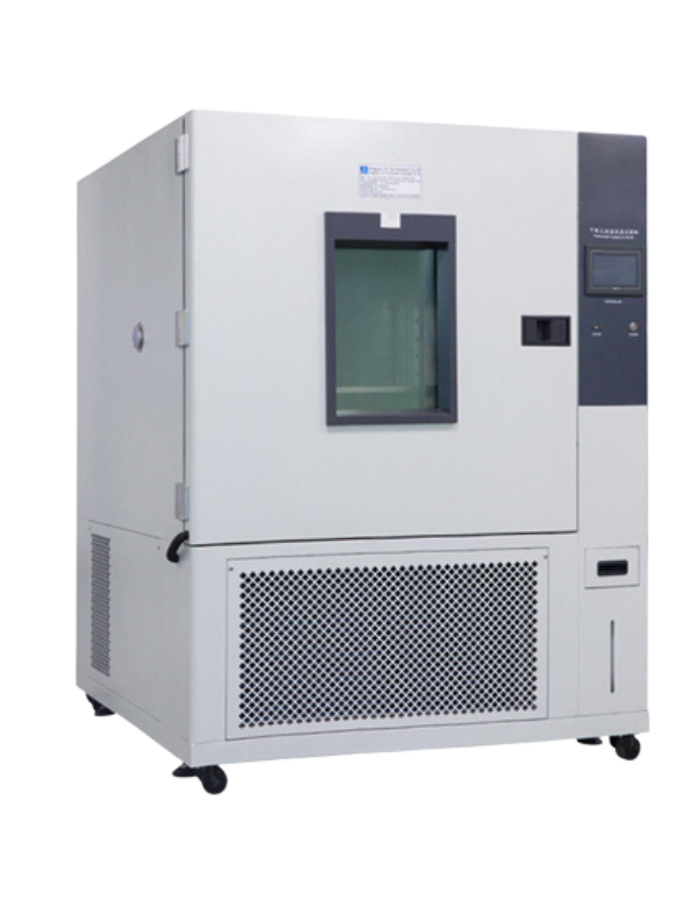
Cold testing allows manufacturers to:
- Evaluate how electronic circuits behave at low temperatures
- Determine the durability of plastic and metal parts that may become brittle
- Test the effectiveness of enclosures and insulation
- Ensure that seals, gaskets, and adhesives perform under freezing conditions
- Verify that LCDs, batteries, and capacitors meet performance expectations
- Simulate transportation and storage in cold climates
- Identify potential risks before mass production or deployment
03
SPECIFICATIONS & STANDARDS
Equipment Specifications & Standards.
The Low Temperature Storage Test Equipment used in such labs is specifically designed for subjecting DUTs to extreme cold. Below are the key specifications for the testing equipment available:
TEMPERATURE RANGE
From +25°C down to -70°C
This wide temperature range enables testing across different climate conditions, ensuring that the product can handle not only operational cold temperatures but also the rigors of cold storage and transport environments.
INTERNAL CHAMBER DIMENSIONS
(All dimensions in millimeters):
Maximum Chamber Size: 1000 × 1000 × 1000 mm Minimum Chamber Size: 400 × 500 × 600 mmThese dimensions accommodate a broad range of product sizes, from small electronic modules to larger mechanical assemblies.
STANDARDS FOLLOWED:
IEC 60068-2-1
MIL-STD-810H Method 502.7
ISO 16750-4
04
APPLICATIONS
Applications of Cold Testing
AUTOMOTIVE
Automotive
Testing sensors, batteries, and infotainment systems for performance during winter driving conditions
AEROSPACE & DEFENCE
Aerospace and Defence
Verifying avionics, navigation systems, and mechanical components used in high-altitude or arctic missions
MEDICAL DEVICES
Medical Devices
Ensuring diagnostic and therapeutic equipment remain operational in refrigerated transport or storage environments
CONSUMER ELECTRONICS
Consumer Electronics
Validating the performance of devices like smartphones, tablets, and wearables in cold climates
INDUSTRIAL EQUIPMENT
Industrial Equipment
Testing outdoor machinery, monitoring devices, and safety systems exposed to environmental extremes
05
RELATED PRODUCTS
Related Environment Laboratory Products
Discover complementary equipment for your testing needs. Optimized for accuracy, efficiency, and compliance.


06
GET IN TOUCH